With the widespread application of sensor technology in fields such as smart home and medical health, the waterproof performance of sensors has also attracted great attention and concern from industry experts, as it directly affects the lifespan of the sensors and the accuracy of the data.
In simple terms, having a sensor with dust-proof and water-resistant capabilities offers the following four main advantages:
Ensuring product safety: The IPXX protection level test can help ensure that the product will not be damaged by dust and water during use, thereby safeguarding the safety of the product.
Extend product lifespan: The IPXX protection level test can help extend the lifespan of the product. When the product is exposed to dust and water, it will accelerate the wear and aging of the product, thereby shortening its lifespan.
Improving product quality: The IPXX protection level test can help enhance the quality of products. When a product has a high IP protection level, it can demonstrate that the manufacturing process and material quality of the product are high, thereby improving the quality of the product.
Reduce after-sales costs: When a product malfunctions, if it has not undergone the IPXX protection level test, it may be impossible to determine the cause of the malfunction, thereby increasing the after-sales costs of the product.
So, what are the differences between various waterproofing levels? And how should we choose sensors with different levels of waterproofing?
Protection level and classification
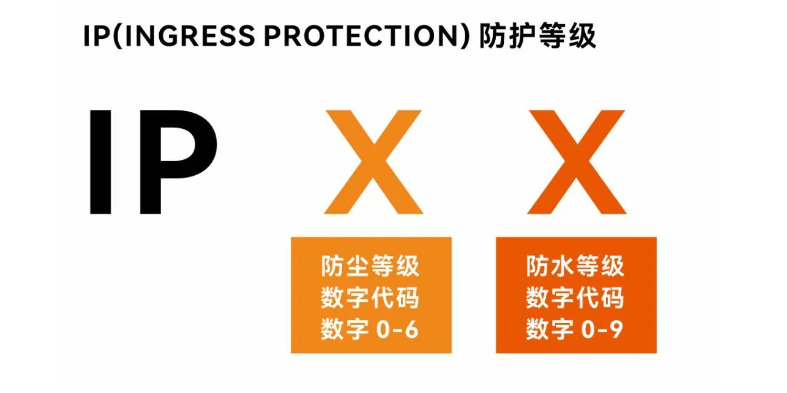
The IP protection level is composed of two numbers. The higher the number, the higher the protection level. The first number indicates the degree of protection against dust and preventing foreign objects from entering, starting from 0 and reaching up to 6; the second number indicates the degree of protection against moisture and water immersion, starting from 0 and reaching up to 8. That is to say, a device with the IP68 level has reached the highest standard in terms of dust and water protection, capable of preventing fine dust and even being able to remain submerged in water continuously.
IP66: This rating indicates that the device completely prevents foreign objects from entering and also completely prevents dust from entering. It can withstand violent ocean waves or strong water jets. The amount of water entering the appliance should not cause any harmful effects. This level of protection is highly suitable for outdoor environments and can effectively prevent splashing and immersion.
IP67: This rating indicates that the device is protected against dust ingress (total protection from contact, protection against dust penetration), and can also withstand short submersion (dust-proof). It can remain functional under a certain water pressure for a certain period of time, and is typically used for devices that need to be used in humid environments.
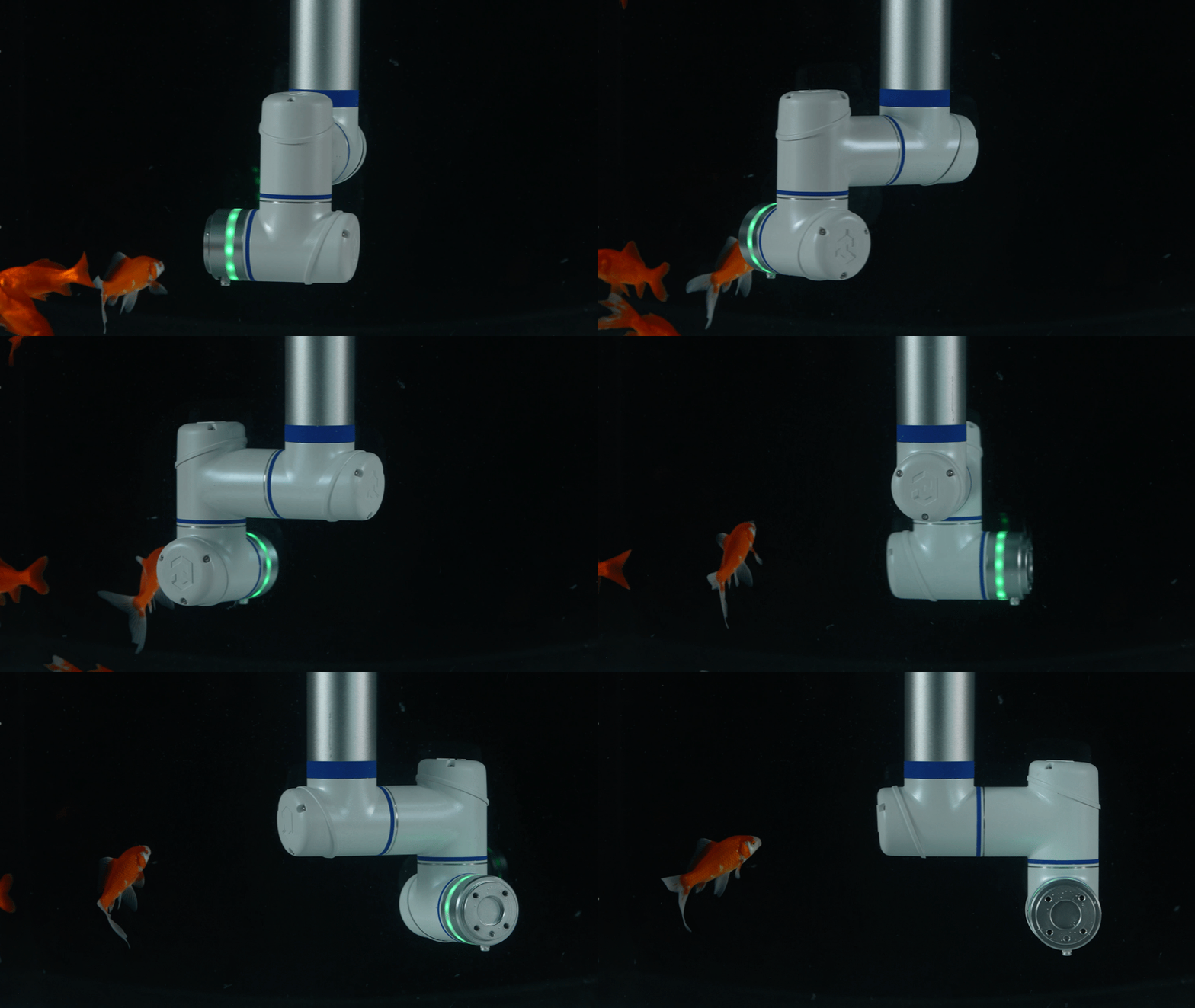
IP68: This is one of the highest levels of the dust and water resistance standards. It indicates that the device can be submerged in water for a long time under specific conditions and is dust-proof. Equipment of this level can usually be used for a period of time in deeper water and is suitable for activities such as underwater photography.
IP69: This is another higher level of the IP rating standard, particularly emphasizing the water resistance and dustproof performance under extreme conditions. This standard is usually applied in environments with high requirements for cleaning and hygiene, such as food processing plants, medical equipment, laboratories, etc. It can withstand high-pressure and high-temperature water jets and demonstrates extremely high waterproof performance.
How to choose the waterproof rating of a sensor?
How to choose sensors with different levels of water resistance? Generally speaking, waterproof pressure sensors can be classified into the following levels:
01 Lightly Water-resistant
Suitable for common daily items and simple measuring devices, such as weather stations, hygrometers, etc. Sensors of this grade are required to be able to withstand light water splashes and humid environments, but are not suitable for long-term immersion or high-pressure water conditions.
02 Moderate Water Resistance
Suitable for industrial automation, environmental monitoring and other fields. Sensors of this grade are required to be able to withstand a certain degree of water splashing or spraying, but not to withstand high-pressure water impact or immersion.
03 Extremely Waterproof
Suitable for applications in medical equipment, smart home, etc. Sensors of this grade are required to be able to withstand high-pressure water impact or long-term immersion, while maintaining good stability and accuracy.
From this, it can be seen that the waterproof rating of the sensor is mainly determined based on the specific usage environment and application scenario.
Apart from the requirements for waterproofing level, waterproof pressure sensors also need to consider some other key performance parameters, such as stability, measurement range, accuracy, size and weight, etc. These parameters need to be selected and optimized according to the actual application scenarios.
Can be customized according to requirements
Various waterproof sensors


